
Why Fresh Hydroponic Nutrition for Livestock?
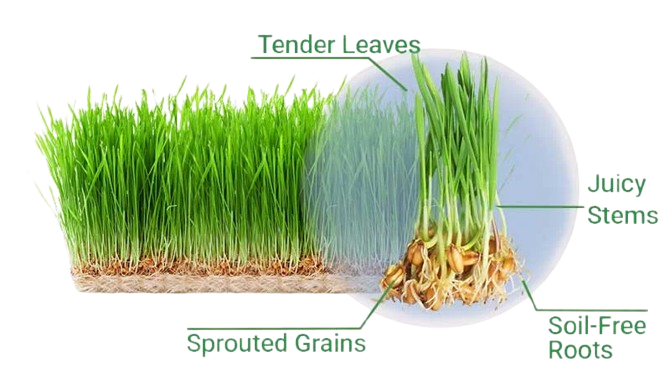
Nutri Ankurit Feed (NAF) represents a new generation of livestock nutrition built around the biological power of sprouted grains. Produced through controlled hydroponic cultivation, NAF transforms cereal seeds into a dense mat of fresh green fodder consisting of tender leaves, juicy stems, sprouted grains, and a living root network.
Unlike conventional fodder systems that depend on soil, weather cycles, and large land areas, NAF is grown in biosecure environments where moisture, temperature, and growth conditions are precisely managed. The result is a consistently fresh, highly digestible feed that provides animals with balanced green nutrition throughout the year.
The sprouting process activates enzymes within the seed, converting stored starch into simpler sugars and increasing the availability of proteins, vitamins, and minerals. This biological transformation improves palatability and digestibility, allowing animals to absorb nutrients more efficiently than many traditional feed sources.
NAF is therefore not simply green fodder. It is a biologically activated feed system designed for consistent nutrition, higher productivity, and improved livestock health.

The Biology Behind NAF
Sprouting Unlocks Nutritional Potential
When grains begin to germinate, they enter a metabolically active phase where stored nutrients are mobilised to support plant growth. During this stage, enzymes break down complex starches into simpler sugars while proteins become more accessible to the animal’s digestive system.
This process significantly improves digestibility and nutrient absorption. Studies have shown that sprouted hydroponic fodder contains higher concentrations of crude protein, vitamins, and minerals compared to the original grain and can improve feed conversion efficiency in livestock.
For ruminants such as cattle and buffalo, this enzymatically active feed helps stimulate rumen microbial activity, improving nutrient utilisation and digestive efficiency.
A Complete Plant, Not Just Grass
Traditional grazing often consumes only the upper leafy portion of plants. NAF, however, is fed as a complete plant system, including:
• Tender leaves
• Juicy stems
• Sprouted grains
• Living root mass
This integrated feed structure allows animals to consume a broader spectrum of plant nutrients and natural enzymes.
Research has shown that feeding hydroponic fodder can improve nutrient digestibility, growth performance, and feed efficiency in ruminants because the entire sprouted plant is utilised.
The result is a highly palatable feed that animals readily consume.
Consistent Nutrition, Every Day
One of the biggest challenges in livestock feeding is variability. Seasonal fodder crops, fluctuating market feed prices, and inconsistent feed quality create unpredictable nutrition for animals.
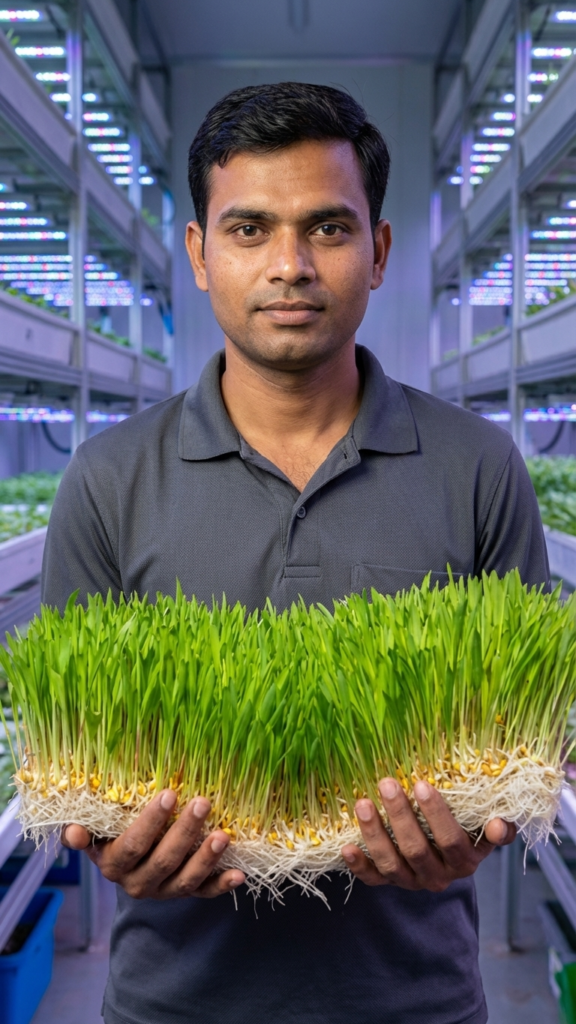
NAF solves this by being grown in controlled environments where conditions such as humidity, irrigation, and growth cycles are standardised.
This allows the feed to maintain a predictable nutritional profile across seasons and locations, ensuring that animals receive the same quality of green nutrition every day.
Hydroponic fodder systems provide a reliable supply of nutrient-rich feed while reducing dependence on seasonal fodder cultivation and land availability.
For dairy farmers, this consistency directly translates into more stable milk production and healthier animals.
Improved Digestibility and Milk Productivity
The soft texture, high moisture content, and enzymatic activity of hydroponic sprouts make NAF extremely digestible for ruminants.
Scientific studies show that feeding hydroponic fodder can significantly improve nutrient digestibility and may increase milk production and weight gain in livestock.
Farmers adopting hydroponic fodder supplementation have reported increases in milk yield ranging from 8% to 13%, along with improvements in overall herd health.
Improved digestibility also supports better feed conversion efficiency, meaning animals produce more output from the same quantity of feed.
Clean, Safe and Biosecure Feed
Unlike conventional fodder cultivation, which can be exposed to soil contamination, pesticides, or unpredictable environmental factors, NAF is produced in controlled biosecure environments.
The fodder is grown without pesticides or herbicides, and the controlled system significantly reduces the risk of contaminants entering the feed chain.
Hydroponic fodder production systems generate fresh, disease-free feed while minimising exposure to agricultural chemicals.
This makes NAF a safer and more reliable feed option for dairy farmers seeking consistent livestock nutrition.
The Shunya Advantage
What differentiates NAF is not just the hydroponic process but the precision system that produces it.
At Shunya, Nutri Ankurit Feed is cultivated using standardized growth protocols and monitored production environments that ensure consistent quality, nutrition, and freshness.
The outcome is a feed system designed to deliver:
• Predictable nutrition
• Higher digestibility
• Improved animal health
• Stable milk productivity
• Reliable year-round availability
NAF therefore represents a shift from traditional fodder cultivation to precision livestock nutrition infrastructure.
A New Category of Livestock Feed
For generations, livestock nutrition has depended on seasonal agriculture and manual fodder systems. Nutri Ankurit Feed introduces a different model: one where fresh green nutrition is produced daily through controlled biological processes rather than uncertain field conditions.
By combining plant biology, controlled cultivation, and modern production systems, NAF creates a reliable foundation for healthier animals and more resilient dairy farming.