
Flows from Every Grain of Nutrition
Shunya's work touches every layer of the rural economy — dairy farming households, local communities, rural entrepreneurs, affiliated service partners, and the Planet. Every GLC we build and every kg of Nutri Ankurit Feed we grow sends a ripple across Bharat.
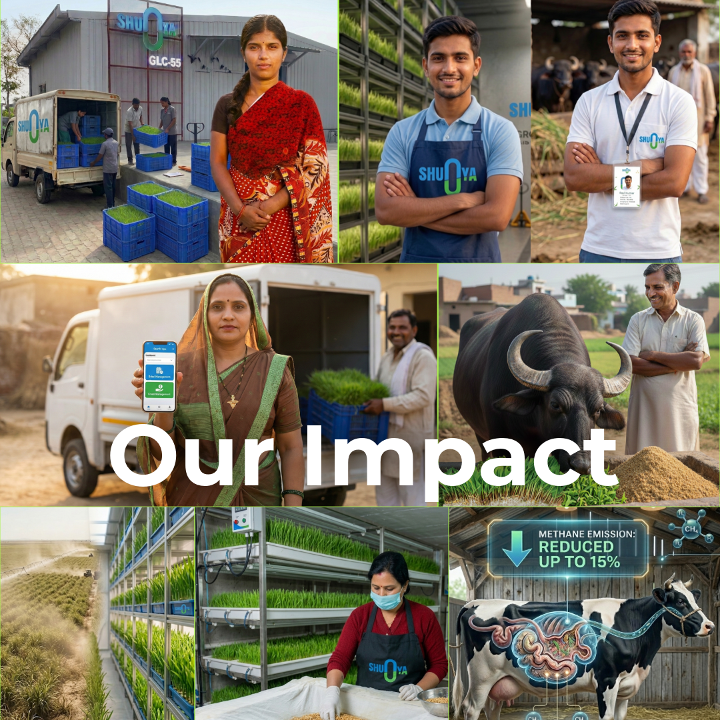
From the women in dairy farming households who are primary care-givers to their herd, to the young community member who finds organised employment, to the rural entrepreneur building a business in their own village — Shunya's infrastructure creates value at every point it touches. And beneath it all, it does so while freeing up land and water and healing the atmosphere we all share.
Helping Farmers Earn More and Spend Less
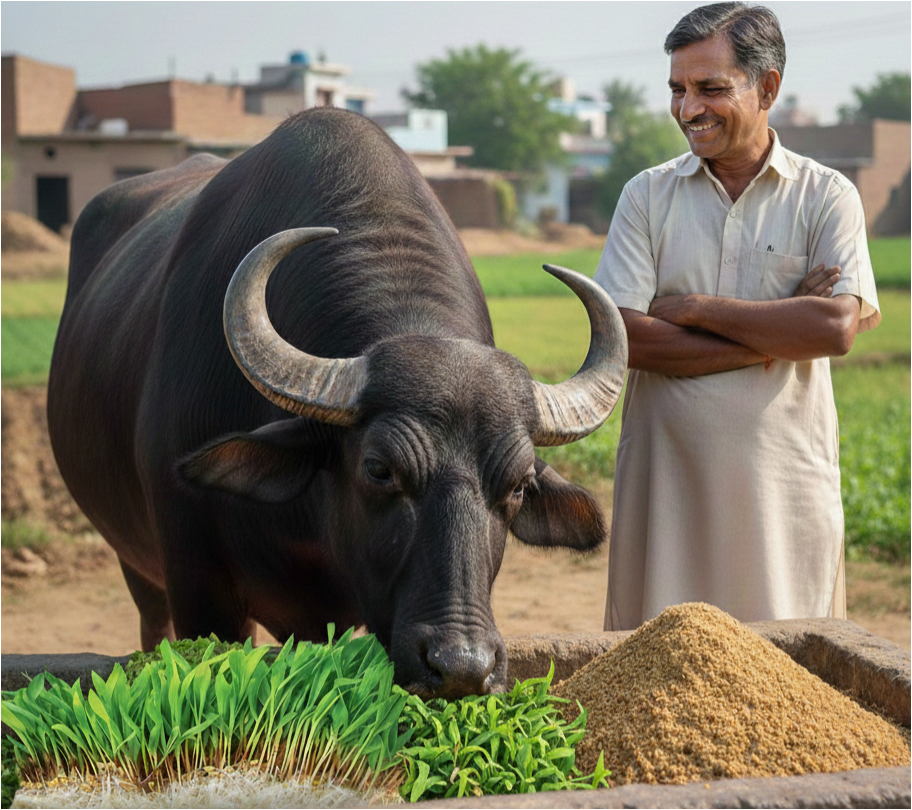
Dairy farming sustains millions of rural households across India — yet farmers face a persistent squeeze: rising input costs and stagnating milk income. Shunya's Nutri Ankurit Feed addresses this directly. By providing fresh, chemical-free, high-nutrition hydroponic fodder as a service, delivered reliably to the farmer's doorstep, we reduce daily fodder expenditure while significantly improving the quality of nutrition the animal receives.
Better nutrition means better milk yield. Healthier animals mean lower veterinary costs. And a dependable supply of green fodder through every season means no more compromising on feed quality when the dry months set in. The result: more money stays where it belongs — in the farmer's household.
Improved milk yield combined with reduced feed cost creates stronger, more resilient household economics for dairy farming families.
Organised Employment, Right Where It Is Needed
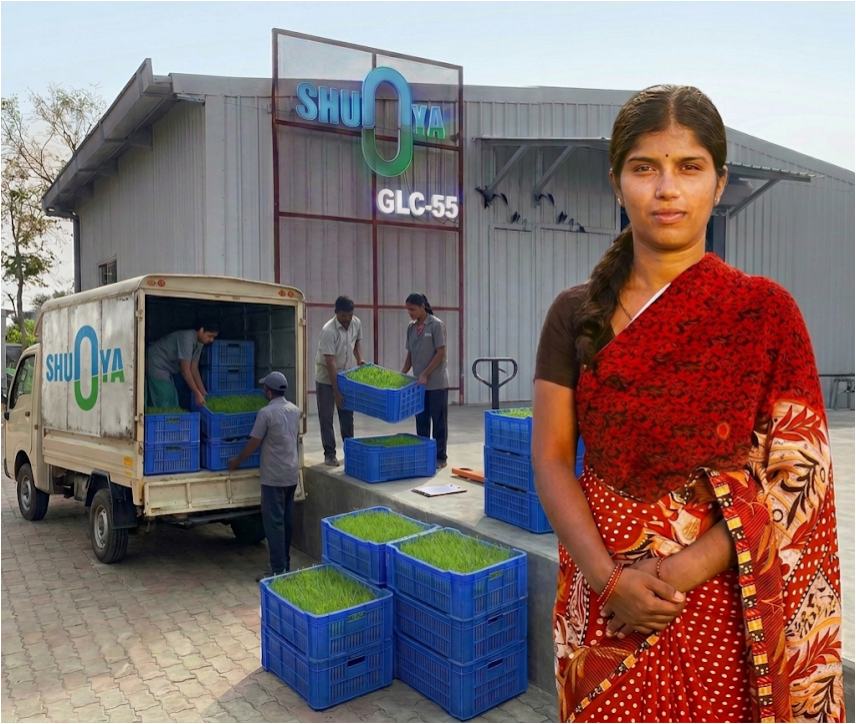
Each Growth and Logistics Centre that Shunya establishes is a node of structured, dignified employment for the surrounding community. From operating the hydroponic production systems to managing logistics and last-mile delivery, GLCs create real, recurring jobs — with training and upskilling embedded from day one.
Our VIDHI standard operating procedures and technology systems mean workers are empowered with knowledge and tools, not simply labour. This is organised employment in rural India — built with the skill development infrastructure that ensures the opportunity compounds over time rather than remaining static.
Read More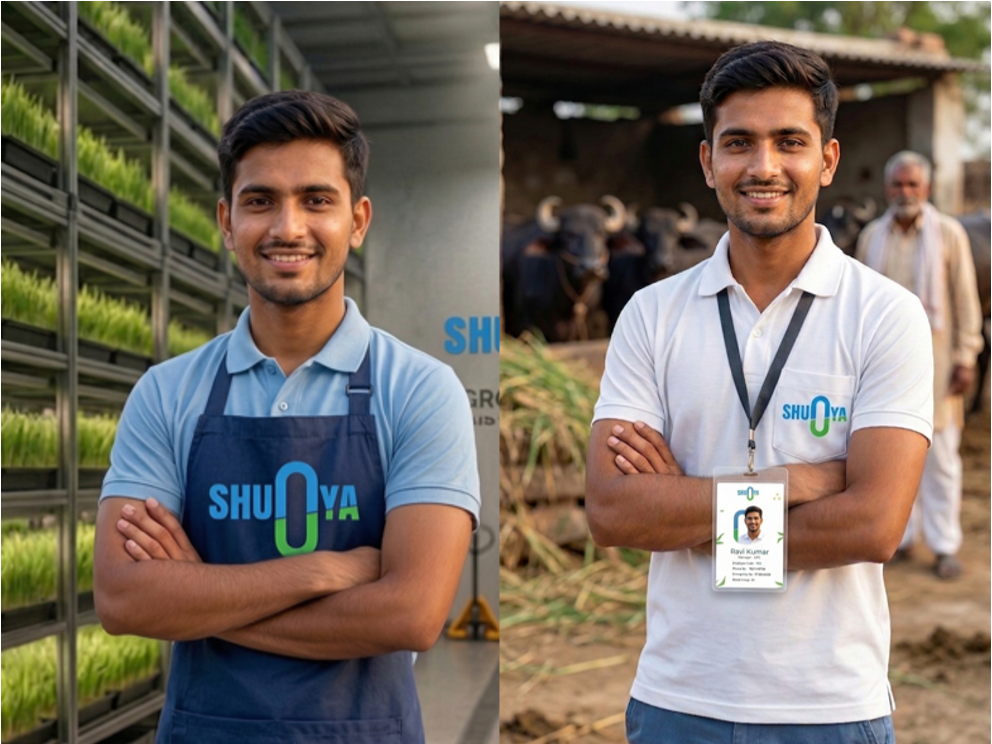

A Gender-Neutral Opportunity by Design
The operations at a Shunya GLC require precision, attentiveness, and consistency — not physical strength or traditional field-labour skills. This makes GLC employment a genuinely gender-neutral opportunity, accessible to women in rural communities without the barriers that so often exclude them from organised work.
As Shunya expands its GLC network, it is intentional about creating spaces where women participate equally — earning independently, upskilling formally, and contributing to their communities in ways that are visible, valued, and sustained. Organised employment for women in rural India is not a side benefit of what Shunya does. It is a deliberate design choice.
Read More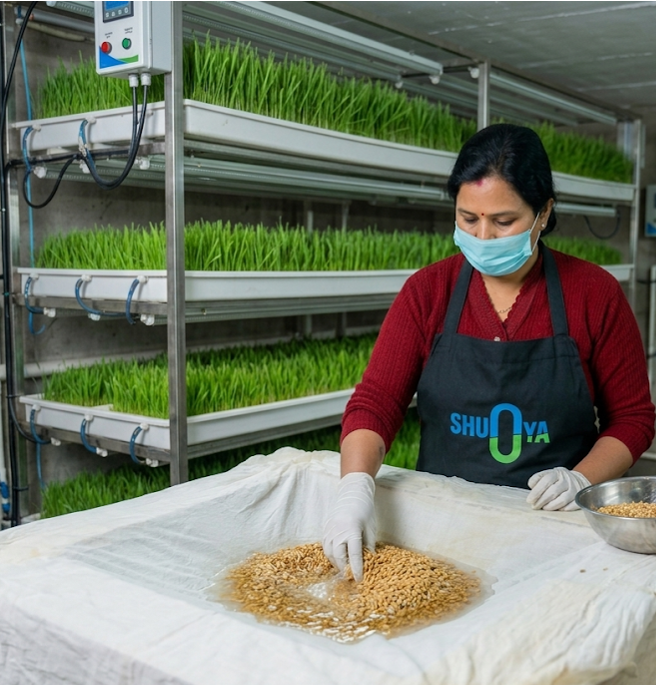
Every GLC Anchors a Local Economy
A Shunya GLC is not an isolated production unit — it is an anchor for a cluster of affiliated services and livelihoods. Logistics partners who transport fresh fodder daily, retail partners who extend Shunya's reach to the last mile, and support services that enable consistent operations — each of these creates meaningful income avenues for local individuals and small businesses.
By building a distributed network of GLCs across rural Bharat, Shunya is effectively creating a rural economic ecosystem in which multiple livelihoods are sustained by a single, reliable demand: nutritious fodder, every day. The ripple goes well beyond the farmer's field.
Read More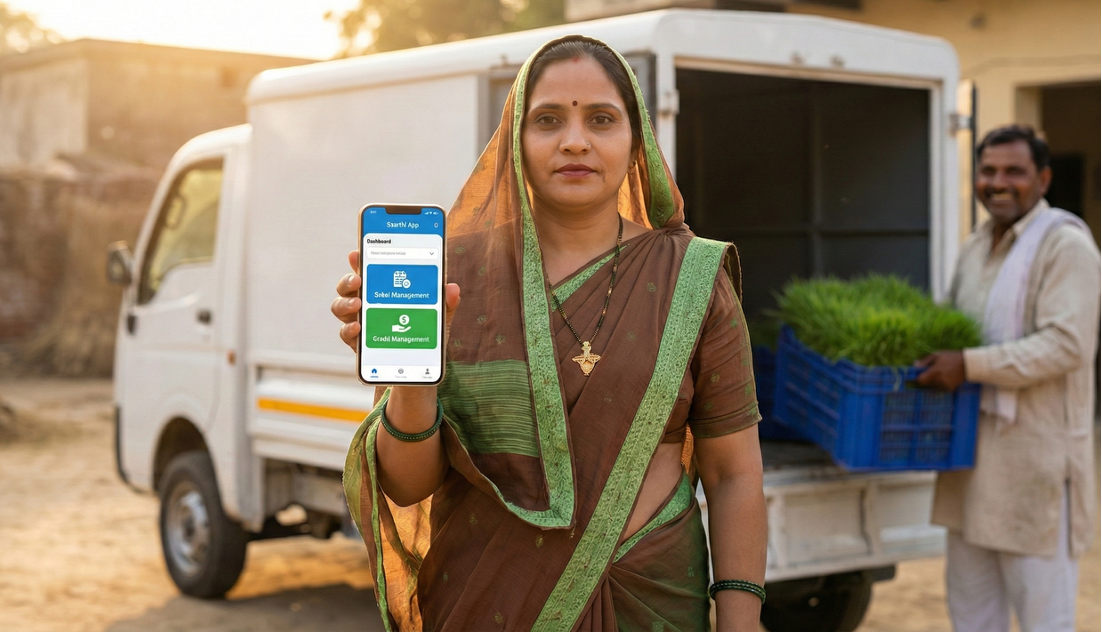

Build Wealth in Your Own Village
Shunya's Production Partner Program invites rural entrepreneurs — individuals and groups — to set up hydroponic fodder production units on their own land, using Shunya's technology, training, and buy-back guarantee. This is a real, lucrative cash-flow business opportunity, built in one's own village, anchored by a demand driver that is stable, recession-proof, and growing: livestock feed.
Urban migration is not a choice most rural families want to make — it is often the only economically rational option available to them. By making it financially rewarding to build locally, Shunya is helping change that calculus. When compelling opportunity comes to the village, the village no longer has to leave to find it.
Turnkey setup. Shunya-backed technology and training. Recurring income with no selling hassle — Shunya buys back all produce. A meaningful business, combining purpose with profit.
Better Nutrition. Lower Emissions.
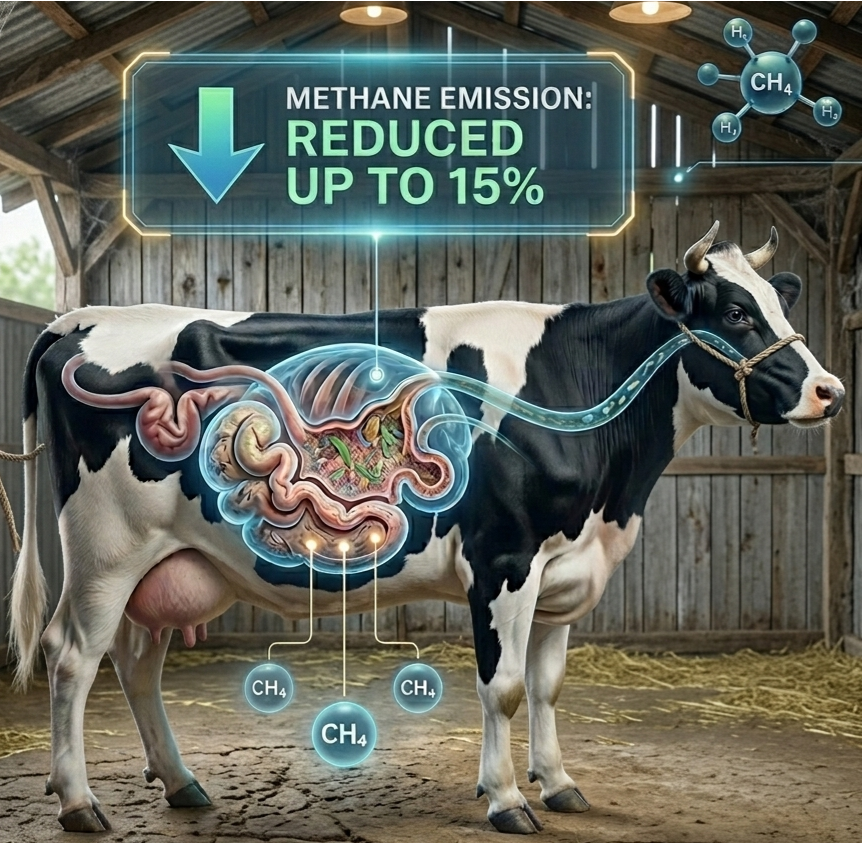
Enteric fermentation — the digestive process in cattle — is a significant source of methane emissions globally. Methane is a potent greenhouse gas, with a warming impact far greater than carbon dioxide over a 20-year horizon. When livestock receive poor-quality, low-digestibility fodder, their gut bacteria produce more methane as a byproduct of fermentation.
Shunya's Nutri Ankurit Feed is high in digestibility and nutrient density. As per NDDB research, improved nutrition delivered to livestock can reduce methane emissions from enteric fermentation by up to 15 per cent. Every animal on Shunya's network is a small but real contribution to a lower-emission future — at scale, this becomes significant.
Up to 15% potential reduction in methane emissions from enteric fermentation in cattle, as per NDDB research on improved livestock nutrition.

Year-Round Nutrition. A Fraction of the Footprint.
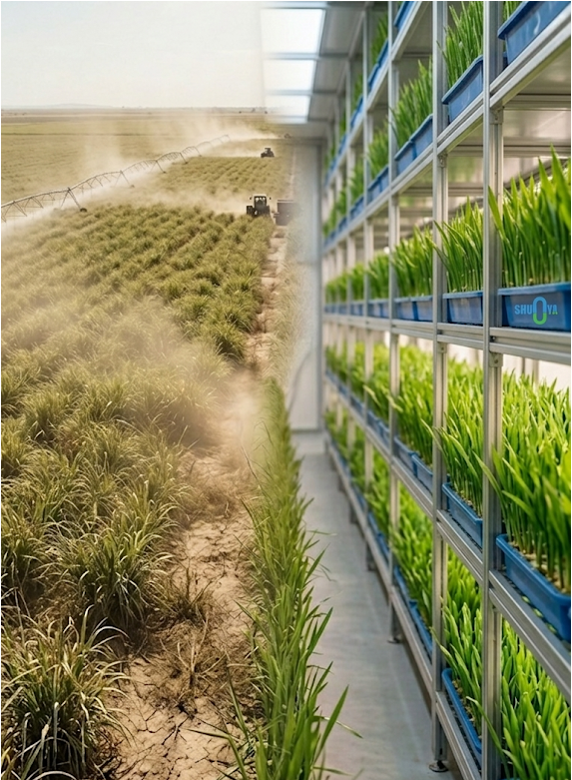
India's land and water resources are under extreme stress — shrinking pastures, depleting aquifers, erratic monsoons, and growing demand from a rising population. Conventional fodder farming is land-intensive, water-intensive, and highly seasonal. Farmers routinely face fodder scarcity in dry months, forcing them to compromise on animal nutrition precisely when it is hardest to afford alternatives.
Shunya's hydroponic system breaks this dependency. Producing equivalent nutrition using only 1 per cent of the land and water that conventional fodder farming demands, and doing so year-round, the system removes seasonality from the equation entirely. This is not a marginal efficiency improvement — it is a structurally different model for feeding livestock at scale, with a fraction of the ecological footprint.
Only 1% of the land and water required compared to conventional fodder farming — delivering equivalent nutrition without the environmental cost.
Seven Stakeholders. One System. Infinite Ripples.
Shunya is building more than a fodder supply chain. We are building infrastructure for rural prosperity — where every GLC is a node of nutrition, employment, entrepreneurship, and environmental repair, one village at a time.
The content of this publication has not been approved by the United Nations and does not reflect the views of the United Nations or its officials or Member States. SDG icons used for illustrative, non-commercial awareness purposes per UN guidelines. www.un.org/sustainabledevelopment