
The Shift from “Weight” to “Quality”
The Indian small ruminant sector – specifically goat and sheep farming – is undergoing a rapid structural shift. Driven by shrinking grazing lands and a demand for better disease control, the industry is transitioning from extensive nomadic grazing to intensive stall-feeding models. And that is where Quality starts to get impacted.
However, many new commercial farmers quickly discover a harsh truth: simply locking an animal in a stall and feeding it bulk calories will increase its weight, but it won’t necessarily produce high-quality meat.
In the modern meat trade, where digital livestock exchanges and discerning urban consumers set the price, the goal is no longer just rearing a heavy animal. The goal is achieving a high Dressing Percentage (the ratio of usable meat to live weight) and superior meat quality.
Unfortunately, traditional stall-feeding diets heavily reliant on dry roughage and dense grain concentrates often fail on both fronts. At Shunya Agritech, in addition to our efforts on improving dairy productivity, we see commercial goat & sheep farmers dramatically improving their end product by shifting their nutritional foundation to Nutri Ankurit Feed, our hydroponically grown sprouted grain green fodder. Let’s break down the biology of building better meat.
The Problem with the “Concentrate Crash”
When farmers transition from open grazing to stall-feeding, the instinct is often to load the animals up on dry grain concentrates (like maize or wheat) to accelerate weight gain.
While this does pack on pounds, it causes several biological issues that directly harm meat quality:
- Metabolic Stress: Small ruminants are biologically designed to digest fibrous green matter, not heavy, complex starches. A high-grain diet creates an acidic environment in the rumen (acidosis), causing chronic low-grade stress.
- Visceral Fat Overload: When fed excess dry starch, the animal converts the energy into visceral fat (fat around the organs) rather than lean intra-muscular fat (marbling). Visceral fat is essentially waste for the butcher; it adds live weight but lowers the dressing percentage.
- Tougher Meat: Animals suffering from digestive stress release higher levels of cortisol. High stress levels before and during the finishing phase deplete muscle glycogen, leading to meat that is tough, dark, and dry (a condition known in the industry as DFD meat).
Building Lean Muscle with Pre-Digested Protein
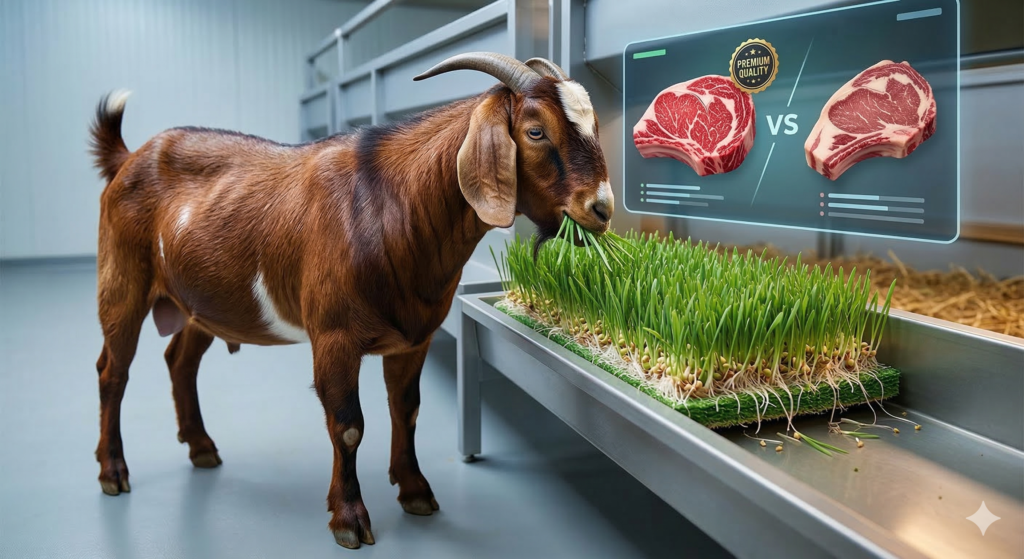
To produce premium chevon (goat meat) or mutton, you need to feed the animal premium building blocks. Muscle is made of protein, and protein is made of amino acids.
Raw dry grains contain complex proteins that require massive amounts of the animal’s energy to break down. Shunya’s Nutri Ankurit Feed changes this equation through Enzymatic Activation.
During our 7/8-day hydroponic sprouting process, the seed’s internal enzymes wake up and break down complex, hard-to-digest proteins into free amino acids. We are essentially “pre-digesting” the feed. When the goat consumes the hydroponic mat, these amino acids are rapidly absorbed into the bloodstream and sent straight to work building lean muscle tissue, rather than being stored as excess organic fat.
The Hydration Factor: Tenderness from Within
One of the most overlooked aspects of meat quality in stall-fed animals is cellular hydration.
Goats and sheep in stall-fed environments on dry feed regimens frequently consume less water than they biologically need, especially during the harsh Indian summers. Chronic mild dehydration leads to tougher, stringier muscle fibers.
Shunya’s hydroponic fodder acts as a living water source. Composed of 80-85% cellular water rich in dissolved enzymes and electrolytes, it ensures the animal is continuously hydrating as it eats. This deep tissue hydration translates directly to a juicier, more tender cut of meat at the butcher’s block.
Antioxidants and the “White Fat” Advantage
Discerning meat buyers look closely at the color of the fat. A clean, white fat cover indicates a healthy, young animal, whereas yellowing fat can be a sign of age, poor diet, or stress.
Fresh green hydroponic fodder is packed with natural antioxidants, specifically Vitamin E and Beta-Carotene (Vitamin A), which are virtually absent in dry straw and heavily degraded in stored grain.
- Vitamin E protects the cell membranes, improving the shelf life and color stability of the meat after processing.
- The high bioavailability of trace minerals like Zinc in our fodder ensures a strong immune system, meaning the animal spends its energy growing rather than fighting off sub-clinical infections.
This results in a healthier, calmer animal, a shinier coat (often the first visual indicator of health on a digital marketplace), and premium, clean-tasting meat with excellent fat color.
The Economics of the Dressing Percentage
Ultimately, commercial farming is a math equation.
Let’s assume you have two goats, both weighing 30kg live.
- Goat A (Dry Feed Diet): Has a heavy gut filled with undigested roughage and excess visceral fat. Its dressing percentage might hover around 45%. Yield: 13.5 kg of meat.
- Goat B (Shunya Diet): Has highly efficient digestion, well-developed lean muscle, and optimal hydration. Its dressing percentage hits 50% or more. Yield: 15+ kg of meat.
For the farmer, Goat B is significantly more profitable. The buyer gets more usable meat per kilogram of live weight, making the farmer a preferred supplier. As digital platforms continue to bring transparency to livestock pricing, quality metrics like these will separate the highly profitable farms from the struggling ones.
In Conclusion: Precision Feed for a Modern Market
Stall-feeding is undoubtedly the future of the Indian small ruminant sector. But bringing the goat indoors is only half the battle; the other half is bringing the right nutrition indoors with it.
You cannot achieve precision meat quality with blunt-instrument feed. By integrating Shunya’s hyper-local, enzymatically activated fodder into your feeding regimen, the rearers aren’t just putting weight on an animal. They are engineering a premium product from the inside out.
Stay tuned to learn more on livestock productivity as we partner with premier institutes across the country and the world to jointly study impact of Nutri Ankurit Feed on livestock and help industries realise the true potential through quality nutrition.
About Shunya Agritech
Shunya Agritech is a leading Fodder-as-a-Service provider building the future of dairy through innovation in hydroponic fodder in India. We grow and deliver affordable hydroponic fodder for small farmers, ensuring a year-round green fodder supply in India—regardless of season or geography. Our proprietary Nutri Ankurit Feed (NAF), grown using vertical farming for fodder, reaches farmers daily through a robust green fodder delivery network. Shunya’s hydroponic fodder delivery in India helps solve deep-rooted issues of nutrition, cost, and availability. Through our digital veterinary services in rural India, we also provide remote veterinary consultations for livestock, connecting farmers to expert care at the tap of a button. With our expanding network of Growth and Logistics Centres (GLC) and franchise-ready models, Shunya empowers communities, enhances milk productivity, and drives sustainable growth—one farm at a time.
Follow Shunya Agritech on Linkedin, X, Facebook & Instagram for regular updates. Subscribe to our Youtube Channel.